Deck construction
Room to Enjoy the Outdoors: Planning a New Deck for Your Home
A well-planned deck starts with how you want to spend time outside. Explore layout, site conditions, decking materials, construction scope, and the questions to ask before building.
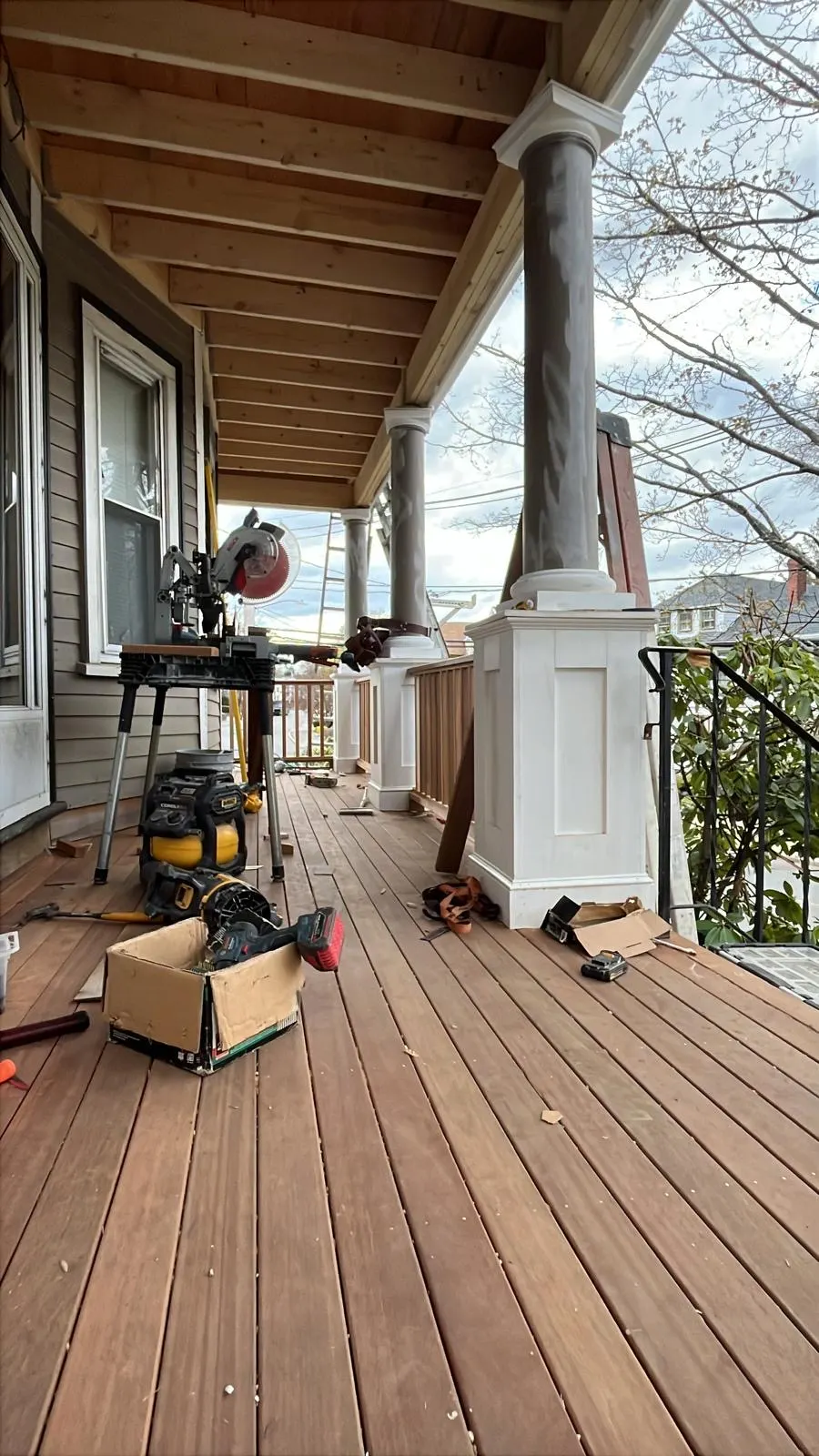
A quiet place for morning coffee. Enough room to share dinner outside. An easier connection between the house and the yard. A new deck can begin with a simple wish to enjoy more of your home.
Before choosing a board color or railing style, it helps to think through how that outdoor space should work. For homeowners in Swampscott and the North Shore, a useful deck construction plan brings together the way you live, the conditions of your property, and a clearly defined scope of work.
Start with the moments you want to make room for
Think about an ordinary afternoon outside, rather than only a photograph of a finished deck. Where would people sit? How would someone carry food from the kitchen? Would you want a dining table, a lounge area, or open space for several uses?
Measure the furniture you hope to use and discuss the space needed to move around it. A deck's dimensions are easier to evaluate when they relate to real activities.
- How many people will usually use the space?
- Which door should connect to it?
- Where should stairs lead into the yard?
- What would make access more comfortable for your household?
Look at the property before settling on a design
Share wide photos of the back of the house, the yard, and the proposed building area. Point out changes in ground level, nearby features you want to keep, and any concerns about access or drainage.
An inspiration photo can communicate a style you like, but the layout still needs to be considered for your actual property. Ask what measurements, site review, and design information are needed before the proposal can be finalized.
Also establish who will confirm applicable approvals and arrange any required inspections. Discuss those responsibilities early, rather than assuming they are included.
Compare materials with everyday care in mind
Wood and composite decking offer different appearances and care routines. Review samples alongside the house's siding and trim, and ask about the specific products being proposed. Consider how much sun the space receives and what ongoing upkeep you are comfortable with.
Avoid treating “low maintenance” as “no maintenance.” For example, Trex's care guide explains that its composite decking still needs cleaning, with instructions that depend on the product.
For wood decking, ask what finishing and future care the selected material calls for. Confirm whether initial staining or painting is included, separate, or planned for a later stage according to the product guidance.
Understand the structure beneath the boards
The visible decking is only one part of the project. Ask how the supporting structure, connections, stairs, and railings will be addressed in the design and proposal. If you are replacing an existing deck, do not assume that the old framing can be reused simply because the surface is being changed.
Our deck construction and repair service starts with discussing the intended work and existing conditions. An assessment may be needed to establish whether a repair, resurfacing, or more extensive replacement is appropriate. Photos alone cannot confirm the condition of concealed components.
Define the complete scope before work begins
Two estimates can describe very different decks. Ask for enough detail to understand the proposed materials and work, including removal of an existing structure, new construction, stairs, railings, and finishing.
Discuss details that affect the finished appearance, such as board direction, visible edges, and transitions to the house and yard. If you want lighting, screening, or another feature, raise it during planning and confirm whether it is included.
Agree on how unexpected conditions or requested changes will be documented and reviewed before additional work proceeds.
Plan for construction and the final walkthrough
Talk about access, material deliveries, protection of nearby areas, and which doors or parts of the yard will be unavailable during construction. Ask how weather, material availability, and outstanding decisions will be reflected in the schedule.
Before using the finished deck, confirm that the agreed completion steps and any required inspections have been addressed. Walk through the work together, record remaining items, and keep the product details and care instructions for future reference.
The best starting point is a conversation about what you want your outdoor space to become. Explore our project process, or request a deck consultation with your town, site photos, approximate dimensions, and priorities. You do not need a finished design to begin planning.